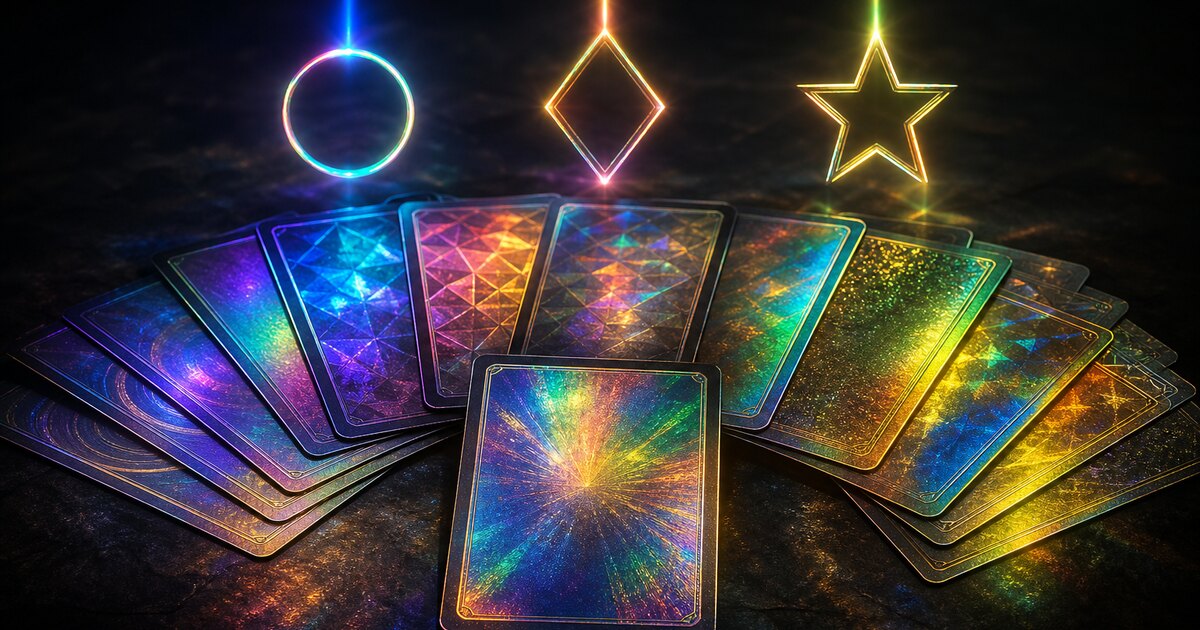
Every Pokémon card tells you how rare it is with a small symbol near the bottom. Learn to read it and you can sort a binder in seconds and know which cards are worth pricing. The catch: Pokémon's rarity system has grown from three simple symbols in 1999 to well over a dozen tiers today. This guide covers all of them, what they look like, and how each one maps to value.
The Three Classic Rarity Symbols
Since the very first sets, the rarity symbol has lived in the bottom corner of the card (near the collector number). The three originals:
- ● Circle = Common — the bulk of every pack.
- ◆ Diamond = Uncommon — a step up, still low value.
- ★ Star = Rare — one guaranteed per pack in most eras.
If you only remember one thing: circle and diamond are almost always bulk; the star is where it starts getting interesting.
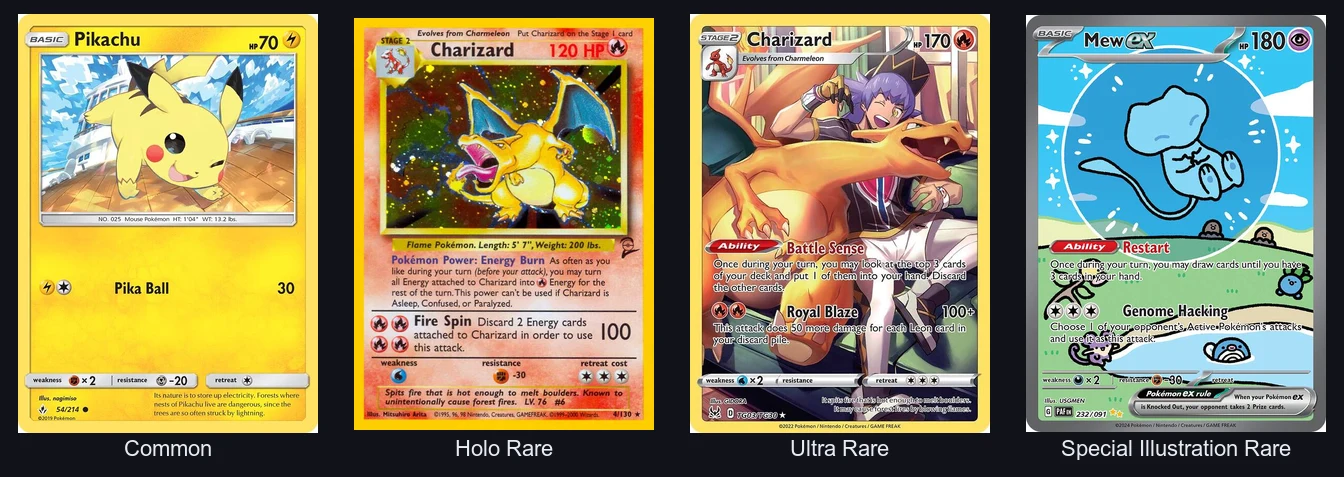
Set Symbol vs. Rarity Symbol vs. Card Number
Three different markings on a card get confused all the time:
- Rarity symbol: the circle / diamond / star described above. Tells you how rare.
- Set symbol: a small logo identifying which set the card is from (each expansion has its own). Base Set (1999) has no set symbol at all, which is one way to spot the originals.
- Card number: e.g.
4/102means card 4 of 102. A number higher than the set total (like199/165) signals a secret rare printed beyond the main set, usually a chase card.
Holo and Reverse Holo
- Holo Rare: a star-rarity card with a holographic (shiny) illustration window. Classic Pokémon chase format.
- Reverse Holo: any rarity with the foil applied to the card body instead of the art. It's a parallel finish, not a separate rarity, but reverse holos of key cards can carry a small premium.
Modern Scarlet & Violet Rarities (2023+)
The Scarlet & Violet era added a whole upper tier of "special" rarities. Here's how they line up, using the same rarity names you'll see in TCG Price Lookup:
| Rarity | What it looks like | Typical value tier |
|---|---|---|
| Common | ● circle | Bulk ($0.05–$0.25) |
| Uncommon | ◆ diamond | Bulk ($0.05–$0.50) |
| Rare | ★ black star (often non-holo in SV) | $0.25–$2 |
| Holo Rare | ★ star + holo art | $1–$15 (vintage far more) |
| Double Rare | "ex" cards, two black stars | $2–$25 |
| Ultra Rare | full-art ex / V / VMAX / VSTAR | $5–$60 |
| Illustration Rare (IR) | special full-art illustration | $5–$50 |
| Special Illustration Rare (SIR) | alt-art chase, textured | $20–$300+ |
| Hyper Rare | gold or rainbow, number above set total | $10–$120 |
| Radiant / Shiny / Secret | shiny foil or secret-numbered | Varies widely |
| Promo | black or white star "PROMO" | $1–$100+ |
(Older eras add their own: Rare Holo EX/GX, Rainbow Rare, Amazing Rare, Gold Secret, and more, but the table above covers what's in packs today.)
Does Higher Rarity Always Mean More Money?
No, and this trips up a lot of people. A few rules of thumb:
- Common, Uncommon and most non-holo Rares are bulk, regardless of how nice they look. Don't waste time pricing them individually unless they're vintage.
- The money lives in the top tiers: Special Illustration Rares, alternate arts, Hyper Rares, and Secret Rares are the modern chase cards.
- Vintage flips the rules: a 1999 Holo Rare can be worth far more than a modern Ultra Rare, especially 1st Edition and Shadowless copies. (See our Charizard price guide for how dramatic that gets.)
- Condition and grade decide the top end. Two copies of the same Special Illustration Rare can differ 10x based on grade. Read trading card conditions explained before you value or sell anything pricey.
A Note on Vintage Symbols (1996–2003)
- No set symbol = Base Set (1999). Add a "1st Edition" stamp (lower left of the art) and you may have a genuinely valuable card.
- Shadowless Base Set cards (no drop shadow behind the art box) sit between 1st Edition and Unlimited in value.
- Early sets used the same circle/diamond/star, plus a "star + H" style holo marking on some.
How to Check What Your Card Is Worth
Once you've identified the rarity, get the actual price in about 30 seconds with TCG Price Lookup:
- Go to TCG Price Lookup and search the Pokémon you have.
- Filter by the correct set (the set symbol tells you which).
- Match the exact rarity and variant (Holo, Reverse Holo, ex, SIR, etc.).
- Compare the TCGplayer market price against eBay sold comps, and check graded prices if it's slabbed.
It pulls live data from both TCGplayer and eBay completed sales, so you see what cards actually sell for, not just asking prices. Start at the Pokémon price hub or the value checker.
Quick Cheat Sheet
- ● Common, ◆ Uncommon, ★ Rare, the three you'll see most.
- Number above the set total = secret/chase card.
- No set symbol = Base Set 1999 (check for 1st Edition / Shadowless).
- The value is in SIR, alt art, Hyper, Secret and vintage Holos, not in how shiny a Common looks.
- Rarity is the first clue; condition and grade set the final price.
For how rarity plays out in other games, see our Lorcana rarity tiers and Yu-Gi-Oh rarity tiers guides, and the most expensive Pokémon cards for what the top rarities actually fetch.
Check live Pokémon card prices by set, rarity and condition at tcgpricelookup.com/pokemon-card-prices, with TCGplayer market and eBay sold comps side by side.